
OFFICE LINE
1.800.555.6789
EMERGENCY
1.800.555.0000
WORKING HOURS
9:00am – 6:00pm
OFFICE LINE
1.800.555.6789
EMERGENCY
1.800.555.0000
WORKING HOURS
9:00am – 6:00pm
ABOUT US
Lorem ipsum dolor sit amet, consectetur adipiscing elit. Vestibulum vestibulum quis metus sodales ullamcorper. Vivamus eu sodales sapien, sit amet rhoncus nisi. Curabitur luctus ipsum ac magna ultricies imperdiet.
ELECTRICAL SERVICES
Lorem ipsum dolor sit amet, consectetur adipiscing elit. Vestibulum vestibulum quis metus sodales ullamcorper. Vivamus eu sodales sapien, sit amet rhoncus nisi. Curabitur luctus ipsum ac magna ultricies imperdiet.
TESTIMONIALS

Thank you for your very professional and promt response. I wish I had found you before I spent money on a competitors theme.
You we’re very professional and quick. We will recommend your services to our friends.
We had floods in our town and we lost our electricity. You and your team got us back up and running in no time. Thanks Avada!
OUR BLOG
Lorem ipsum dolor sit amet, consectetur adipiscing elit. Vestibulum vestibulum quis metus sodales ullamcorper. Vivamus eu sodales sapien, sit amet rhoncus nisi. Curabitur luctus ipsum ac magna ultricies imperdiet.
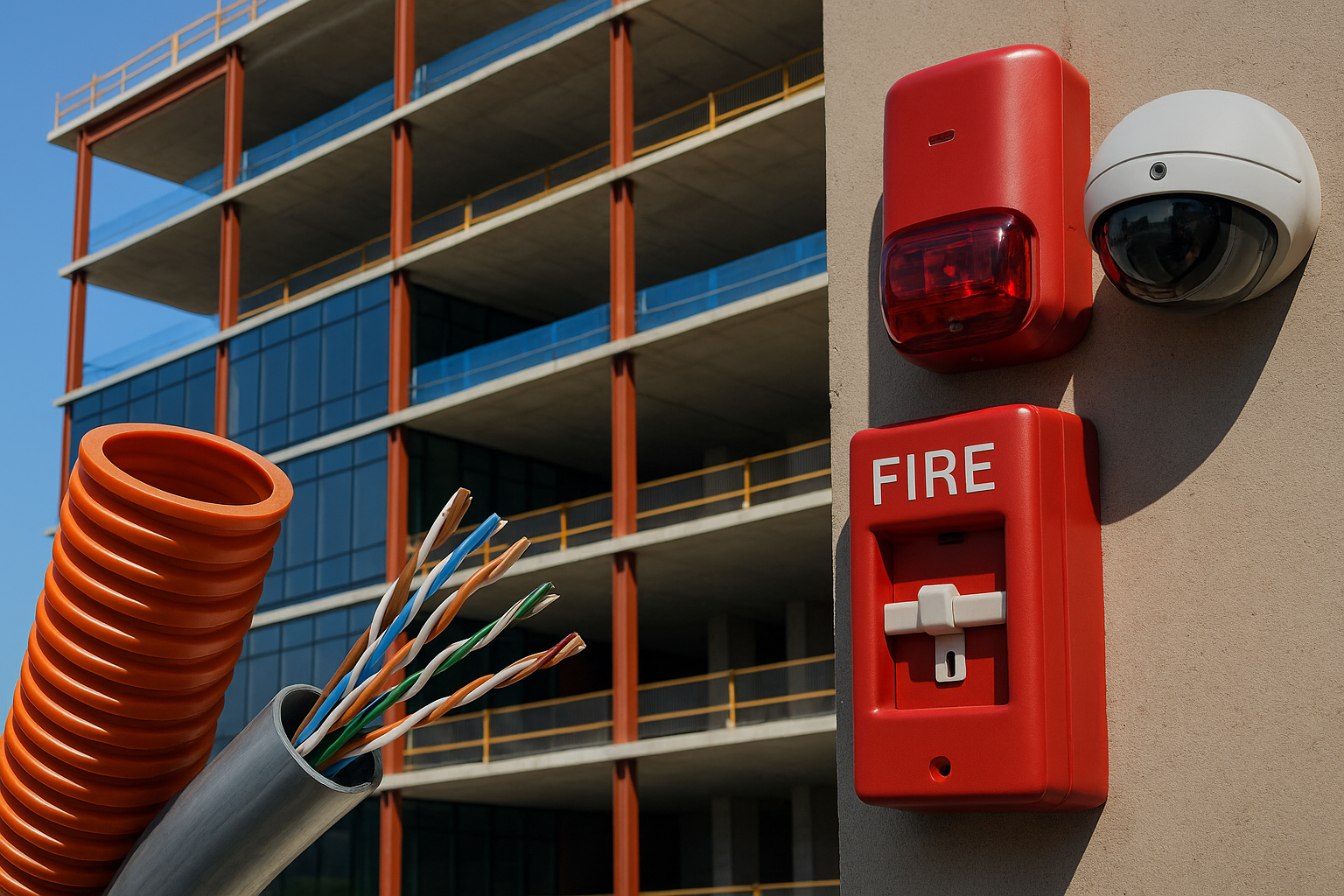
Wisconsin’s Updated Commercial Building Code 2025
Wisconsin's Updated Commercial Building Code means changes for contractors, developers, general contractors and consumers. This blog post looks at those changes and what that means for you. On October 1, 2025, Wisconsin will adopt a new version of the Commercial Building Code, based on the 2021 ICC codes with state-specific amendments. This change significantly affects systems outlined under Division 27 (communications and low-voltage cabling) and Division 28 (fire alarms, security, and life safety systems). Whether you're a subcontractor, general contractor, developer, or business owner, understanding these updates is essential to ensure code compliance, system performance, and long-term reliability. Division 27: Structured Cabling & Communications Infrastructure Key Updates: New performance standards for fiber optic testing, including reflection index requirements. Clarification on loose-tube vs. loose-buffer fiber. Removal of obsolete performance metrics like PSACR. Requirement for digitally signed record drawings (no more paper closeout docs). PoE cabling must now support 802.3bt PoE++ (up to 90W), essential for cameras, WAPs, and smart building tech. Textile-based innerduct accepted as a valid method for cable routing. 🔗 Explore our Structured Cabling Services What These Code Updates Mean for You: [...]
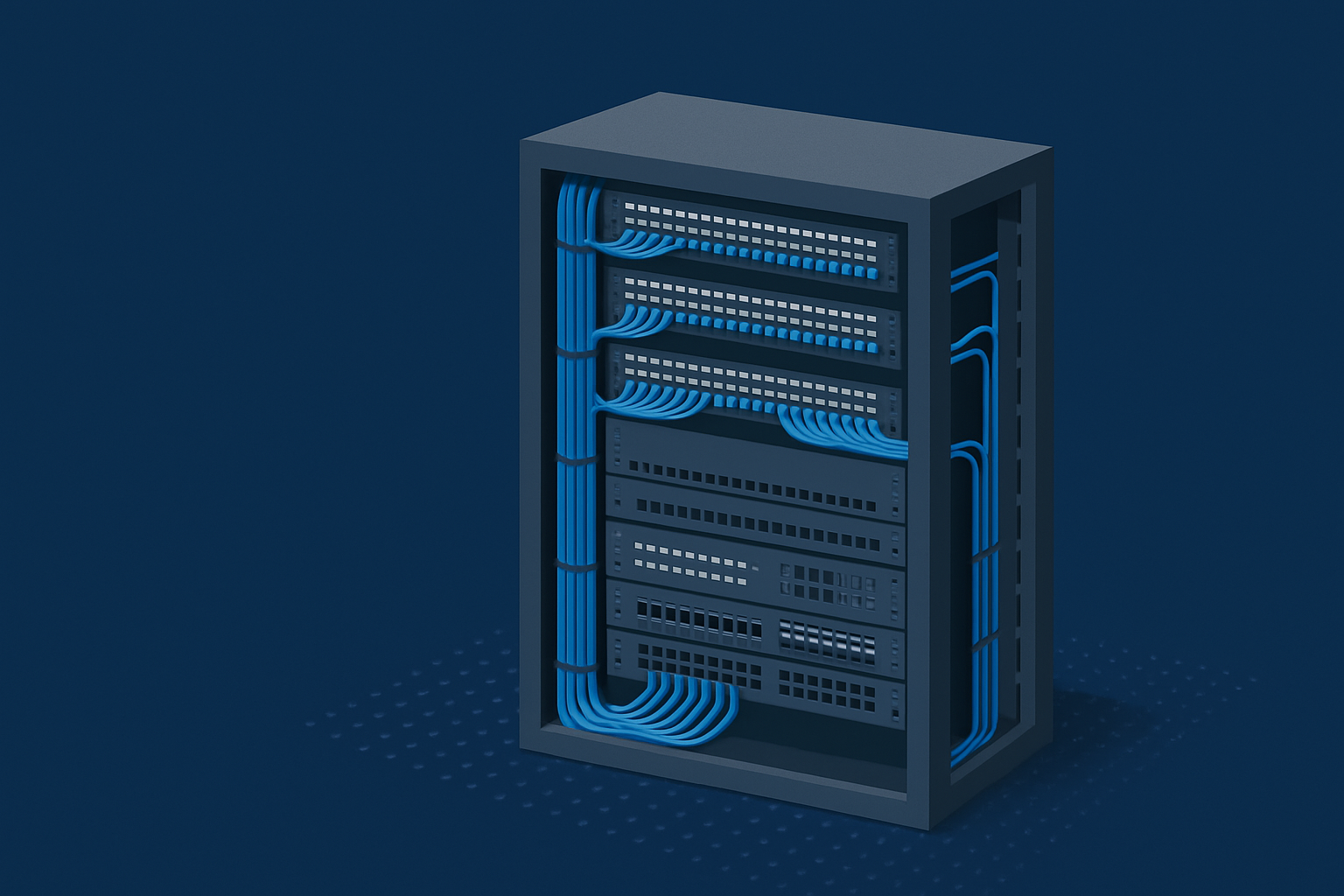
Structured Cabling Standards in MDF Design (TIA, ANSI, NEC)
Why Structured Cabling Standards Matter Structured cabling is the physical foundation of your IT network. Without proper design and adherence to standards, you risk poor performance, compliance failures, and costly rework. That’s why, at Newport Network Solutions, Inc., we follow the industry’s top guidelines—including TIA, ANSI, and NEC standards—especially when designing the Main Distribution Frame (MDF), the central hub of network connectivity. By following proven structured cabling standards in MDF design, we help ensure your mission-critical network performs reliably and efficiently. What Is Structured Cabling? Structured cabling is a standardized approach to network infrastructure that includes the design, installation, and management of cable systems for voice, data, and video. Unlike ad hoc wiring, structured cabling is organized, scalable, and easily modified. Backbone cabling (vertical) Horizontal cabling (from MDF/IDF to outlets) Telecommunications rooms (MDF and IDFs) Work area outlets Patch panels and cross-connects Cabling pathways and spaces The Role of the MDF The Main Distribution Frame (MDF) is where external services (like internet or phone) enter your building and connect to internal network systems. It hosts: Core switches and routers Patch panels for all [...]
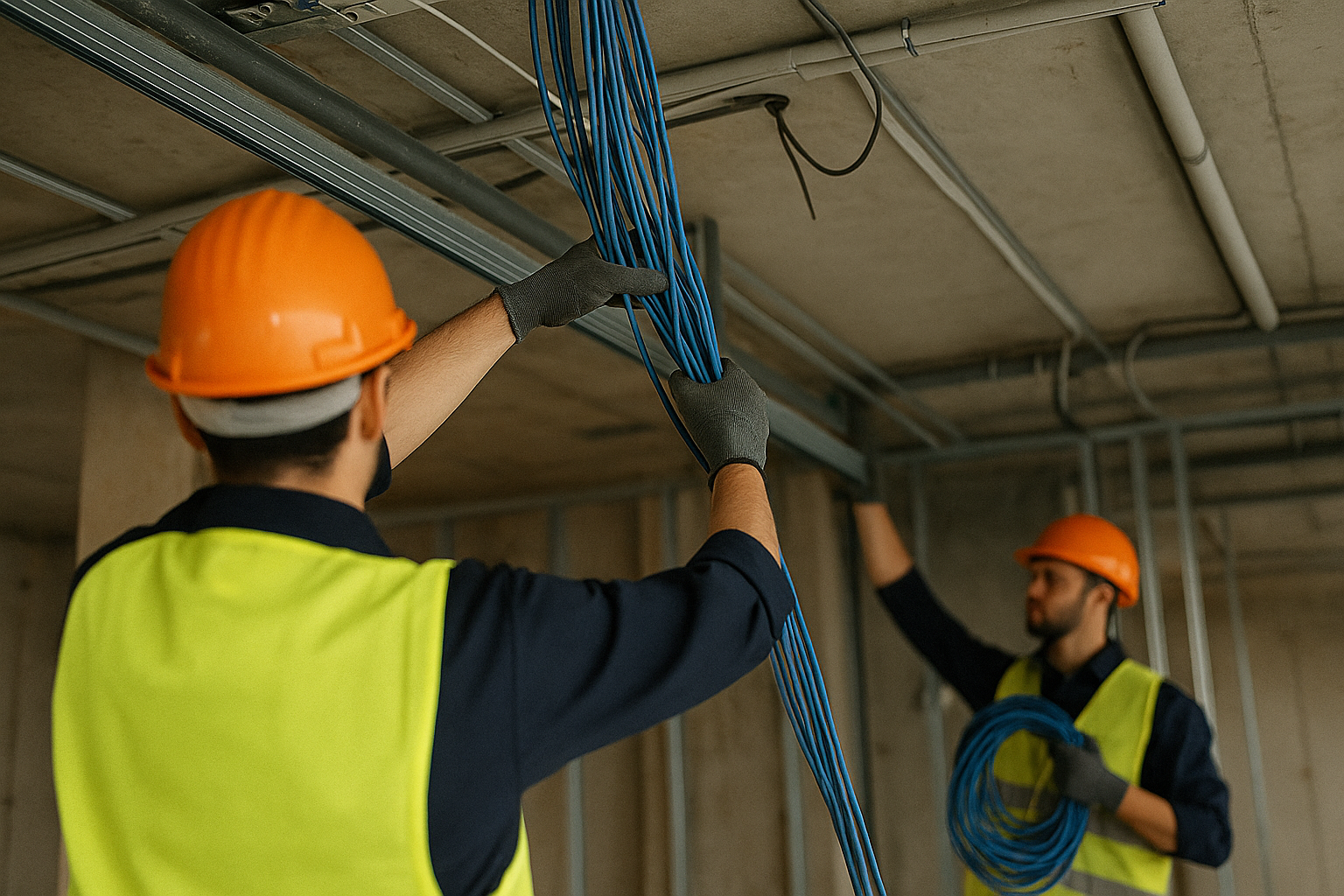
Should You Subcontract Divisions 27 & 28 Work Directly or Through an Electrical Contractor?
When managing a complex construction project, general contractors often face a critical decision: Should Divisions 27 and 28—covering communications infrastructure and electronic safety/security systems—be subcontracted directly to a low-voltage integrator, or packaged through the electrical contractor who then subs it out? Both methods are widely used in commercial construction, but each has trade-offs in terms of cost, coordination, communication, and compliance—especially when working with fiber optics, security systems, fire alarms, and structured cabling. This guide breaks down the pros and cons of each strategy, explains what subcontracting Divisions 27 and 28 includes, and outlines when each approach works best. What Are Divisions 27 and 28? In the CSI MasterFormat system, Divisions 27 and 28 encompass critical building technologies often categorized under "low-voltage" but with distinct scopes: Division 27: Communications Structured Cabling (CAT6/CAT6A, Fiber Optics) Data & Voice Networks Wireless Systems & Distributed Antenna Systems (DAS) Telecom Equipment Rooms Cable Pathways & Raceways Rack/Stack, Patch Panels, and Enclosures Division 28: Electronic Safety & Security Fire Alarm Systems (including mass notification) Video Surveillance (CCTV) Access Control & Entry Management Intrusion Detection Intercoms & Paging [...]
OFFICE LINE
1.800.555.6789
EMERGENCY
1.800.555.0000
WORKING HOURS
9:00am – 6:00pm
OFFICE LINE
1.800.555.6789
EMERGENCY
1.800.555.0000
WORKING HOURS